|
 |
|
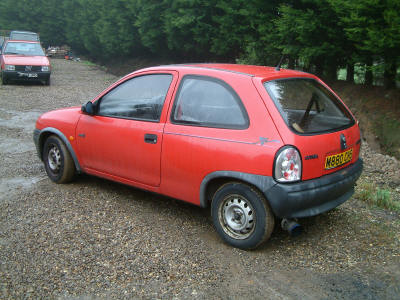
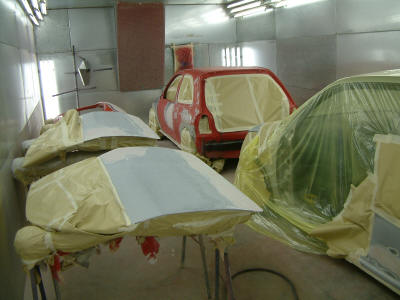
One very standard looking Corsa ready for modification.
You can see Jamie has already installed an aftermarket exhaust,
taillights, and mirrors.
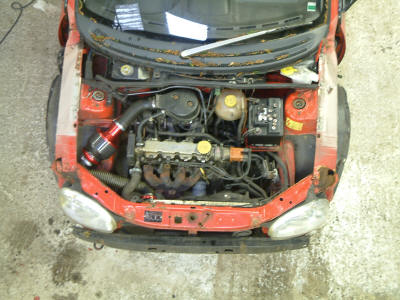
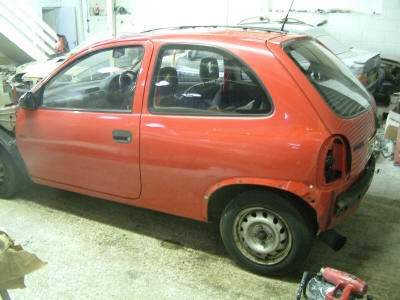
First job is to remove the bonnet, wings, arches bumpers, and all the
parts that are to be replaced.
Then graphics are removed with a heat gun.
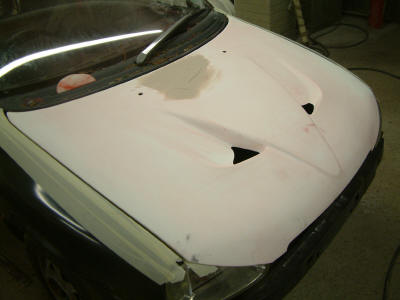
Then we start installing the new parts - firstly the bonnet and new
wings (the old ones had a few bits of rust in them). |
 |
 |
 |
 |
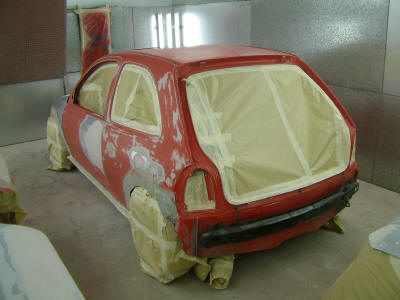
By now the entire car has been sanded and we
start the metal work.
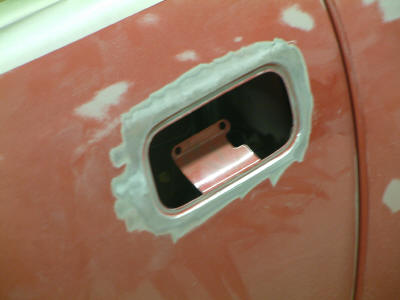
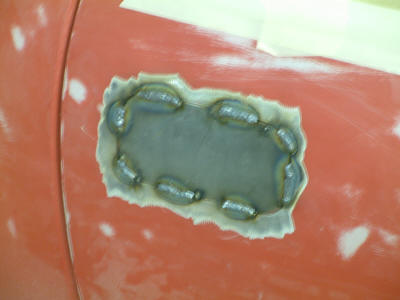
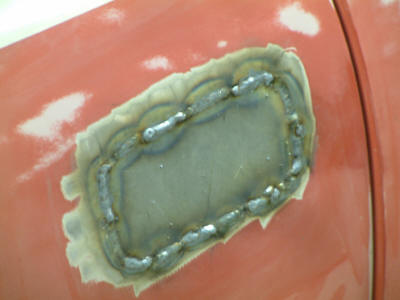
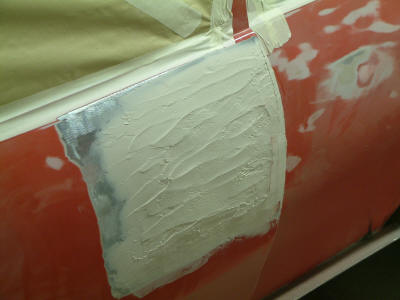
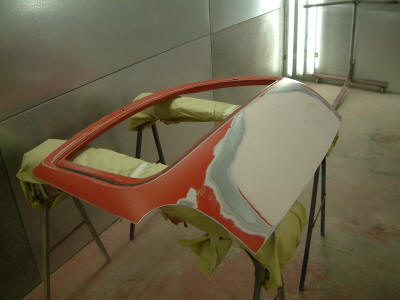
First job is to de-handle the car. This is done by stripping the paint,
fabricating a metal plate and then seam welding the plate into position.
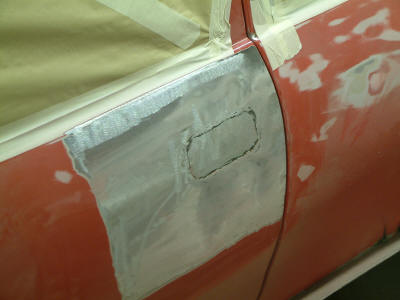
Next the welds are ground flush and the surrounding paint removed for a
skim of filler over the whole area to ensure it completely smooth.
It looks like we use huge amounts of filler to do this, but in reality
because it is so thin very little is used. Its left to the next day to
harden properly before sanding. |
 |
 |
 |
 |
 |
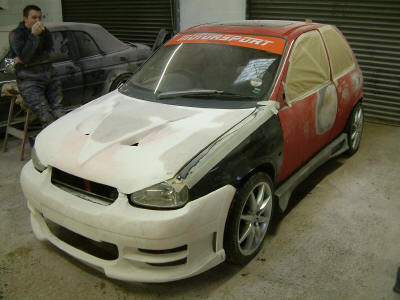
With the bumper and skirt fitted the car really is
starting to take on its final appearance - although much work is left to
do. The tailgate is being made smooth and this takes the same
preparation as the doors and any other smooth or bad boy panel.
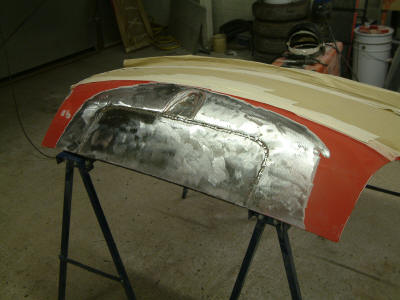
Below you can see it seam welded - we always seam weld panels because
otherwise they flex between the welds and you can see them a few weeks or
months later. Seam welding really is the only way to do truly smooth
panels that stay smooth. |
 |
 |
|
Above you can just make out the strip of metal that has
been welded to the sill in order to help locate the skirt. The metal has
been striped from the front and rear arches in readiness for bonding.
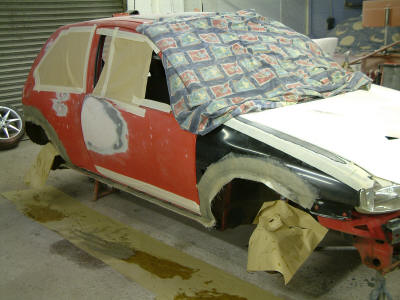
On the left you can see the car once the laminate has
been applied to the same panels. It is onto this fibreglass laminate that
we will bond the fibreglass arches in a process known as bonding. The bond
is so strong that once cured the arches and skirts will have to be
destroyed to be removed.
We recently removed one such kit to rebuild a car
and it took 6 hours of grinding !!! |
 |
 |
It is here that this car caused us a problem. When the
arches and skirts were tried in position they were deemed to be too high
from the ground.
After consultation with the customer (we expected him
simply to say he was going to lower the car) he requested air suspension.
So whilst we were waiting for parts we primed the rest of the shell in
order to protect it and so that something was being done on the car whilst
waiting.
We would ordinarily and preferably have simply bonded
the arches and skirts into position before priming the shell. |
 |
 |
 |
 |
 |
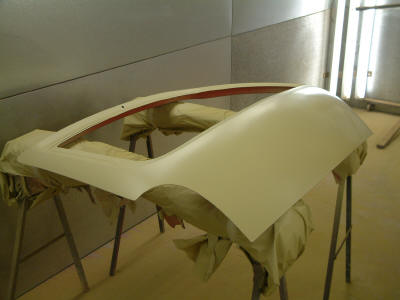
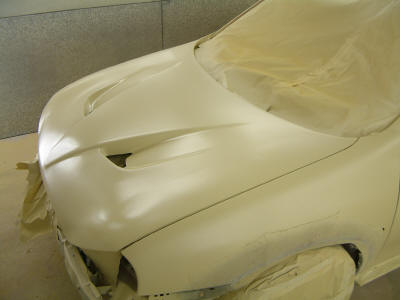
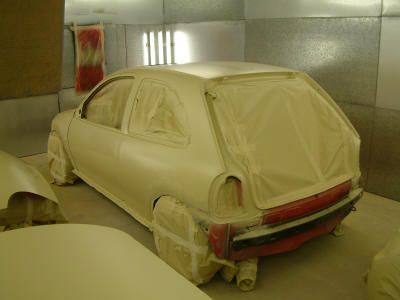
For many the car really looks like it is getting
somewhere once the primer is applied.
As with filler which is best left over night to cure
and shrink before being sanded primer is best left for a few days or
ideally a week to cure fully before being sanded.
Both products shrink slightly as they cure, by letting
them shrink before you sand them it means they have no shrinking to do
afterwards which would mean re-doing the sanding job.
This car did cover well and both the doors and boot as
well as numerous dents disappeared completely under the primer. |